Table of Contents
Most people don’t think about their trees until something goes wrong—a fallen branch, a cracked limb scraping against the roof, or a tree that suddenly looks half-dead after a storm. By that point, the damage is already done. Regular tree trimming isn’t just about keeping things looking neat. It’s one of the most impactful things you can do to protect your property, your family, and the long-term health of the trees you’ve spent years growing.0
At BW Tree Removal, tree trimming is one of the most requested services—and for good reason. Once homeowners see the difference a proper trim makes, they rarely skip it again.
What Does Tree Trimming Actually Do for a Tree?
Trimming removes dead, diseased, or overgrown branches. But the effects go much deeper than what you can see.
When a tree carries too many branches, it diverts energy to limbs that are no longer productive. This starves healthier sections of the tree, slowing growth and making the entire structure more vulnerable to pests and disease. Removing the dead weight allows the tree to redirect nutrients where they’re needed most.
There’s also the matter of airflow. Dense canopies trap moisture, which creates ideal conditions for fungal infections. Thinning out the canopy lets light and air circulate freely—two things that keep trees strong and resilient through every season.
How Overgrown Trees Quietly Damage Your Property
It’s easy to overlook a tree that seems fine from a distance. But overgrown branches have a way of causing problems that build slowly until they become impossible to ignore.
Roots compete with foundations. Overextended limbs rub against roof tiles, gutters, and siding. During storms, branches that should have been removed months ago become projectiles. None of these issues announce themselves in advance—they just show up as repair bills.
There’s also the question of sight lines and sunlight. Overgrown trees can block natural light from reaching your garden, your outdoor living spaces, or even the interior of your home. A well-timed trim restores that openness without requiring you to remove the tree entirely.
Signs Your Trees Are Overdue for a Trim
Not sure if your trees need attention? Here are some clear signals:
- Dead or hanging branches that move independently from the rest of the tree in wind
- Crossing branches that rub together and create wounds in the bark
- Uneven or lopsided growth that puts structural stress on one side of the tree
- Branches growing toward power lines, your roof, or neighboring properties
- Reduced flowering or fruiting in trees that would normally produce
Any one of these signs is worth acting on. Several of them together means it’s time to call in a professional.
Why Timing Matters More Than Most People Realize
Tree trimming isn’t a one-size-fits-all, do-it-anytime task. Different species respond better to trimming at different points in the year. Many deciduous trees benefit from late winter trimming, just before new growth begins. Others are best left until after they’ve flowered.
Trimming at the wrong time can stress a tree unnecessarily, leave it exposed to disease during a vulnerable period, or interrupt its natural growth cycle. A professional service knows how to read the tree and time the work accordingly—which is a big part of why results from expert trimming last longer and look better.
What Sets Professional Tree Trimming Apart from DIY
There’s no shortage of videos online showing people trimming their own trees. And for small, low-hanging branches, some basic pruning is perfectly manageable. But for anything involving height, significant branch size, or proximity to structures and power lines, professional trimming is the safer and more effective option.
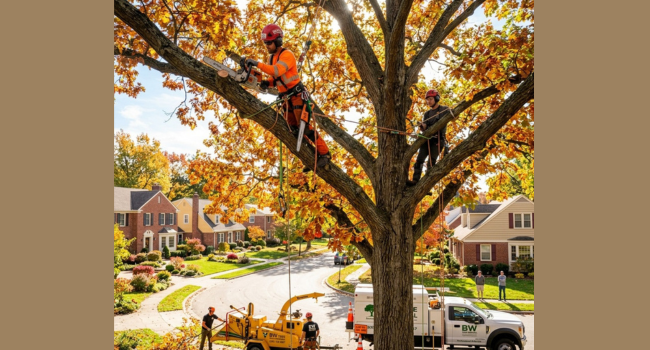
Professionals carry the right equipment for the job—not just chainsaws and loppers, but elevated platforms, rigging systems for controlled branch removal, and the training to assess structural risk before making a single cut. They also know how to make clean cuts that heal properly, rather than jagged wounds that invite disease and decay.
Tree Trimming done right by skilled professionals actively extends the life of your trees, reduces long-term maintenance costs, and keeps your property looking its best year after year—all without putting yourself or your home at risk.
BW Tree Removal brings that level of care and expertise to every job. Whether it’s a single ornamental tree in the front yard or a full property with mature hardwoods, the team approaches every trim with precision and genuine respect for the trees they’re working on.
The Long-Term Payoff of Staying on Top of It
Properties with well-maintained trees consistently present better—and that matters whether you’re planning to sell or simply want to enjoy where you live. Curb appeal is real, and healthy, shaped trees contribute to it significantly.
Beyond aesthetics, there’s the safety factor. A maintained tree is a predictable tree. You’re not left wondering whether that one heavy branch will hold through the next thunderstorm. You’re not waiting on a neighbor’s complaint about encroaching growth. You’re in control of your property—and that peace of mind has real value.
Trees that receive regular trimming also tend to live longer. Consistent care prevents the kind of structural deterioration that eventually makes removal the only option. Investing in trimming now often means avoiding a much larger expense down the road.
BW Tree Removal: Trimming Done with Care
BW Tree Removal has built its reputation on showing up prepared, working cleanly, and leaving properties in better shape than they found them. Tree trimming is a service the team takes seriously—not as a routine task to be rushed through, but as skilled work that makes a real difference to the trees and the people who own them.
If your trees are overdue for attention, there’s no better time to get ahead of it.