
Table of Contents
A street-legal ebike reaches factory-assisted speeds of 20 mph (32 km/h) or 28 mph (45 km/h) in North America, and 25 km/h (15.5 mph) across the UK and Europe, but that legal cutoff does not define how fast an ebike can actually go. The motor does not brake when you hit its programmed limit; it simply stops assisting, allowing pedaling effort, gearing, and downhill momentum to carry you past 30 mph.
For daily riders, the real frustration is speed loss rather than speed limits. Steep inclines, head winds, heavy cargo, and battery voltage sag routinely pull real-world commuting pace down to 12–18 mph. Sustained travel speed ultimately depends on motor wattage, payload, and whether you are pedaling on flat asphalt, grinding uphill, or coasting down a descent.
Standard Ebike Speeds and Legal Categories
Factory speed regulations govern all commercially sold electric bicycles to ensure they remain legally categorized as bicycles rather than mopeds or motorcycles. In the United States, federal standards and most state laws categorize models into three distinct classes based on pedal assist, throttle operation, and maximum assisted velocity.
In Europe and the UK, the regulatory framework follows the EN 15194 standard, which designates standard pedal-assist cycles as pedelecs. Selecting a certified street-legal ebike guarantees that the drive system smoothly cuts electrical output once you reach 25 km/h, preserving access to public bicycle lanes and multi-use shared paths without requiring license plates or vehicle registration.
The distinction between throttle-driven speed and pedal-assist speed defines how quickly riders reach their desired cadence. Throttle-actuated models propel the bike up to 20 mph without physical pedal input, whereas Class 3 performance systems require constant rider cadence to unlock higher assist thresholds. Once electrical assistance ends, any speed increase depends solely on how hard the rider can turn the cranks.
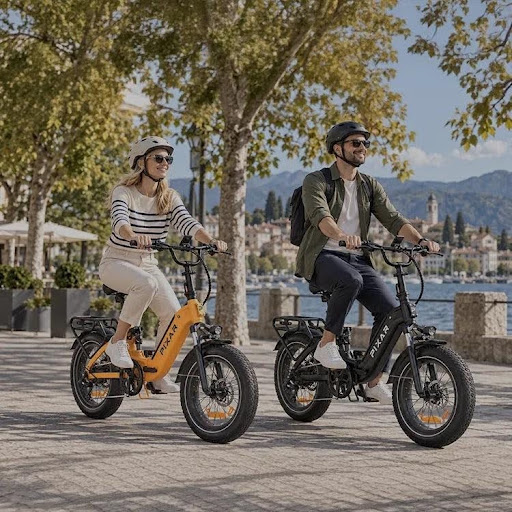

Understanding Ebike Speed Limits by Class
Ebike speed limits by class define both the mechanical capability of the motor and where riders are legally permitted to travel. Regulatory boundaries balance cyclist safety with the stopping limitations of lightweight bicycle components on shared public infrastructure.
The following reference table outlines the mechanical parameters, motor cutoffs, and typical route access for standard ebike categories across North America and Europe:
| Ebike Category | Motor Assist Cutoff | Throttle Function | Continuous Power Limit | Typical Infrastructure Access |
| US Class 1 | 20 mph (32 km/h) | No throttle (Pedal assist only) | 750W | Paved bike paths, urban bike lanes, multi-use recreational trails |
| US Class 2 | 20 mph (32 km/h) | Throttle and pedal assist | 750W | Street bike lanes and most paved pathways; occasionally restricted on trails |
| US Class 3 | 28 mph (45 km/h) | Varies (Throttle up to 20 mph, assist to 28 mph) | 750W | Roadways and dedicated road bike lanes; restricted from pedestrian pathways |
| EU/UK Pedelec | 25 km/h (15.5 mph) | Walk-assist only (up to 6 km/h) | 250W | Standard bicycle paths, city streets, shared commuter lanes |
| EU S-Pedelec | 45 km/h (28 mph) | Optional assistance up to 45 km/h | 4,000W (Category L1e-B) | Roadways only; requires helmet, insurance, registration plate, and license |
Understanding these categories prevents riders from purchasing an overpowered machine that cannot legally navigate local cycling paths. For most daily transportation tasks, 20 mph or 25 km/h provides an ideal balance of commuting velocity, pedestrian safety, and battery conservation.
Real-World Factors Affecting Everyday Ebike Speed
Factory speed ratings represent benchmark measurements taken under controlled test scenarios with moderate rider weights on flat pavement. In daily riding environments, several mechanical and environmental factors affecting ebike speed determine how rapidly a bicycle accelerates and whether it can sustain its maximum rated velocity:
- Motor Wattage and Peak Torque: A continuous rating of 250W efficiently maintains 25 km/h on level European city streets, but maintaining 28 mph on steep hills demands 500W to 750W motors delivering between 60 Nm and 85 Nm of torque.
- Battery Voltage and Depletion: Higher-voltage systems (48V or 52V) deliver sustained power output under heavy electrical load. As any lithium battery drops below 30% state of charge, voltage sag reduces peak wattage, resulting in a noticeable 2 to 4 mph drop in top assisted speed.
- Total Payload and Distribution: Total weight—combining rider mass, frame accessories, and commuting luggage—directly affects acceleration and hill-climbing velocity. Heavier payloads demand significantly more watts to overcome gravity on gradients.
- Aerodynamic Drag and Riding Stance: Wind resistance accounts for roughly 80% of total mechanical resistance when traveling above 18 mph. Upright cruiser frames create substantial aerodynamic drag, whereas aggressive road postures reduce frontal resistance and increase speed.
- Tire Width and Inflation Pressure: Wide, low-pressure knobby tires generate heavy rolling resistance that dampens acceleration, while narrower, high-pressure semi-slick tires roll faster on asphalt with less friction.
How Fast Does a Touring Ebike Actually Cruise?
Evaluating cruising pace on long-distance journeys requires looking beyond sprint speed to examine sustainable hourly averages. An experienced cyclist riding a fully equipped touring ebike loaded with waterproof panniers, spare tools, and camping equipment rarely travels at the absolute motor cutoff limit for hours at a time.
On paved country highways and gravel touring trails, practical touring ebike cruising speeds generally settle between 18 km/h and 24 km/h (11 mph to 15 mph). Traveling within this specific velocity window keeps the electric motor spinning within its optimal thermal efficiency range, preventing controller overheating and excessive battery consumption.
Pushing an electric touring bicycle at its maximum 25 km/h or 28 mph cutoff under heavy touring weight causes energy consumption to surge from roughly 8 Wh/km to over 18 Wh/km. By settling into a moderate cruising rhythm, riders can complete full 80 to 120 km touring itineraries on a single charge without running out of electrical support before reaching their destination.
Can You Ride Faster Than the Motor Assistance Limit?
A common misconception among beginner cyclists is that riding faster than motor assistance allows is impossible or prohibited by the mechanical drivetrain. Because electric bicycles utilize standard mechanical drivetrains integrated with sprag clutches, exceeding motor cutoffs is entirely achievable through human exertion or gravity.
When an electric bicycle speeds down a 6% paved gradient, gravitational acceleration easily propels the machine to 30 mph or 40 mph (48 km/h to 64 km/h). At this juncture, the internal motor clutch automatically disengages, allowing the hub or bottom bracket to freewheel without resistance from the electric coils. The rider encounters no electronic drag, only the natural rolling resistance of the tires and aerodynamic air pressure.
Similarly, an athletic rider pedaling on a flat roadway can sprint past the 20 mph or 25 km/h motor cutoff using leg power alone. However, pushing a 24 to 28 kg electric bicycle past its cutoff threshold on flat asphalt requires substantially more physical effort than accelerating a lightweight 9 kg acoustic road bicycle, which is why most riders naturally cruise right at the motor’s assistance boundary.
Attempting to bypass factory speed limiters through software modifications or aftermarket tuning chips creates severe legal and mechanical hazards. Altering motor governors voids factory manufacturer warranties, overheats planetary gears, accelerates brake wear, and instantly reclassifies the vehicle as an unregistered motorcycle under European and North American road laws.
Stopping Power and Safety at Higher Speeds
Riding an electric bicycle at sustained speeds above 20 mph significantly increases stopping distance due to the quadratic relationship between velocity and kinetic energy. When velocity doubles from 14 mph to 28 mph, kinetic energy quadruples, requiring four times as much braking force to bring the bicycle and rider to a complete stop.
Safe high-speed operation requires components engineered specifically to handle high thermal loads:
- Hydraulic Disc Braking Systems: Fluid-actuated dual-piston or quad-piston hydraulic calipers generate consistent clamping pressure with minimal hand fatigue, resisting brake fade during repeated high-speed stops.
- Rotor Diameter Sizing: Front and rear rotors measuring 180 mm or 203 mm dissipate heat far more effectively than basic 160 mm discs, preventing fluid boiling on sustained downhill descents.
- Puncture-Resistant ECE-R75 Rated Tires: Standard bicycle tires are prone to tread delamination and pinch flats under the weight and stress of heavy electric bicycles moving at 45 km/h. Ebike-specific tires incorporate reinforced sidewalls and thicker breaker strips to maintain traction.
- Sturdy Heat-Treated Alloy Frames: Certified 6061 and 7005 aluminum frames withstand torsional forces generated by hard cornering and rapid deceleration without developing structural fatigue.
Frequently Asked Questions
Q: Can an ebike go 50 mph?
A: Specialized high-output electric motorbikes can reach 50 mph, but standard commercial ebikes cannot. Factory-built street-legal models are capped at 20 mph or 28 mph in the United States and 25 km/h in Europe, whereas models traveling at 50 mph use motorcycle-grade batteries and motors exceeding 3,000W that require vehicle registration, specialized licenses, and motorcycle safety equipment.
Q: Can you ride an ebike without pedaling?
A: Yes, provided the ebike is equipped with a throttle. Class 2 models in North America operate on pure electric power up to 20 mph via twist or thumb throttles, whereas standard European pedelecs require active pedaling to engage the motor and only permit walk-assist throttles up to 6 km/h.
Q: How fast does an average 250W ebike travel on flat roads?
A: A 250W ebike comfortably sustains 25 km/h (15.5 mph) on smooth, level terrain under moderate pedal assistance. On steep inclines or against severe headwinds, a 250W motor will gradually settle into speeds between 14 km/h and 18 km/h depending on rider cadence and gear selection.
Q: Does an ebike motor shut off when applying the brakes?
A: Certified electric bicycles incorporate integrated motor cut-off sensors inside the brake levers. The moment the rider squeezes either lever, the sensor signals the motor controller to cut power instantly, ensuring the drive system does not fight against the braking calipers during emergency stops.
Final Words
Determining how fast can an ebike go in practical daily use involves balancing regulatory thresholds with the physical realities of wind resistance, payload mass, and battery efficiency. In everyday commuter use, standard legal ceilings of 20 mph, 28 mph, or 25 km/h deliver rapid urban transit while safeguarding full access to municipal bike infrastructure.
Rather than pursuing maximum speed through hazardous software modifications, experienced cyclists prioritize robust hydraulic braking, adequate gear range, and comfortable cruising efficiency. Understanding how motor assistance coordinates with physical pedaling allows riders to select the right category for their route and travel safely across all road conditions.