Table of Contents
There is one decorating trick that interior designers use more than almost any other, and it costs far less than new furniture: the right cushion. A well-chosen cushion anchors a colour palette, softens a rigid sofa, introduces texture, and makes a room feel deliberately styled rather than randomly assembled. The challenge is knowing which cushions to pick, how many to use, and how to arrange them so the result looks curated rather than cluttered.
Why Cushions Are the Easiest Room Refresh
Cushions sit at the intersection of function and decoration. They add physical comfort — lumbar support, a spot to rest your head — but they are equally powerful as visual tools. Unlike paint or flooring, they cost a fraction of major renovations and can be swapped out whenever your taste evolves or a new season rolls around.
Key numbers to keep in mind:
- Size matters: 45 cm × 45 cm is the most versatile standard size. For larger sectionals, 50 cm or 60 cm cushions read better at scale.
- Odd numbers win: Groups of three or five feel more dynamic than symmetrical pairs.
- Covers vs. filled cushions: Cushion covers let you change the look without buying new inserts. If you want a one-step solution, choose cushions sold with fillers — insert quality directly affects how plump and luxurious they look.
Choosing the Right Cushion Cover
Texture is the single most important element when selecting cushion covers. A room furnished entirely in smooth fabrics looks flat; introduce a knotwork cover, a lattice weave, or a boho fringe and suddenly there is depth.
| Texture | Style Signal | Best Paired With |
| Knotwork / macramé | Artisan, bohemian | Natural linen sofas, rattan furniture |
| Lattice weave | Geometric, modern | Neutral upholstery, concrete or marble tables |
| Pom-pom trim | Playful, eclectic | Children’s spaces, colourful accent chairs |
| Plain boucle | Minimal, luxurious | Scandinavian or japandi interiors |
| Printed patterns | Bold, personality-driven | Monochrome rooms needing a focal point |
When mixing patterns, apply the classic designer rule: one large-scale pattern, one medium-scale pattern, and one solid or subtle texture.
The Colour Strategy That Always Works
A simple, reliable method:
- Pull from what is already in the room. If your rug has gold threads, a gold-toned cushion makes the room feel intentional.
- Use 60-30-10. Sixty percent of your cushions should match or complement the sofa. Thirty percent introduce a secondary colour. Ten percent can be a bold pop — deep sapphire, terracotta, or blush pink.
- Neutrals as anchors. Cream, beige, and grey cushions never date and make bolder pieces stand out.
Cushion Arrangements for Different Sofa Types
2-Seater Sofa: Two cushions on each end, one smaller rectangular or bolster cushion in the centre. Five pieces total is ideal.
3-Seater Sofa: Three cushions across the back, one or two stacked in front at the corners. A long rectangular cushion (30 × 90 cm) placed centrally adds a layered, hotel-lobby quality.
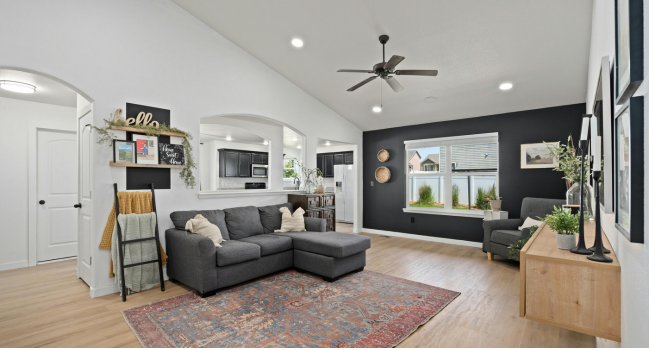
L-Shaped or Sectional: Use the corner as an anchor point with a large 60 cm or 70 cm cushion. Work outward with progressively smaller sizes. Seven to nine cushions is reasonable without looking excessive.
Pairing Cushions With Accent Chairs
Cushions are not just for sofas. A single well-placed cushion on one of your accent chairs instantly makes it look more inviting and thoughtfully styled. For boucle lounge chairs, add one cushion in a contrasting colour — olive green or terracotta — to break the monochrome effect. For wooden or rattan chairs, a flat cushion in a bold geometric print adds visual warmth without overpowering the frame.
The rule for accent chairs: keep it to one cushion. Two reads as an afterthought; one reads as a choice.
When to Replace vs. Refresh
Cushion fillers compress over time. A cushion that was plump when new will look flat after two to three years of daily use. Covers and inserts can be replaced independently — if a cover you love has faded but the insert is still firm, buy a fresh cover.
Signs you need new cushion fillers:
- The cushion does not spring back after you sit on it
- The corners look deflated even right after fluffing
- The silhouette has become rectangular rather than square
Final Thoughts
Styling cushions is one of the highest-return investments you can make in any room. A few hundred dirhams spent thoughtfully across three or four well-chosen pieces — different textures, a considered colour palette, sizes that suit your sofa — can transform a room from functional to genuinely beautiful. Before buying anything, photograph your sofa in natural light and compare options side by side; it removes most of the guesswork. Which texture are you drawn to most — boucle, woven, or something with a bold print?