Table of Contents
There’s a particular exhaustion that comes from trying to see everything. You land, you sprint through a checklist of monuments, you photograph each one from the angle everyone else uses, and you fly home more tired than when you left. Greece, more than most destinations, punishes this approach. Its value isn’t in the volume of sights you tick off but in the layers you’re willing to sit with. And once you understand that, the way you plan a trip changes completely.
Consider what “ancient Greece” actually asks of a visitor. These aren’t theme parks with a clear entrance and a gift shop at the exit. They’re fragments of a world that shaped law, philosophy, theatre, and the very idea of a citizen. Standing among them means little if you’re checking your watch. It means everything if you arrive with a bit of context and the patience to let the place speak.
The problem with the rush
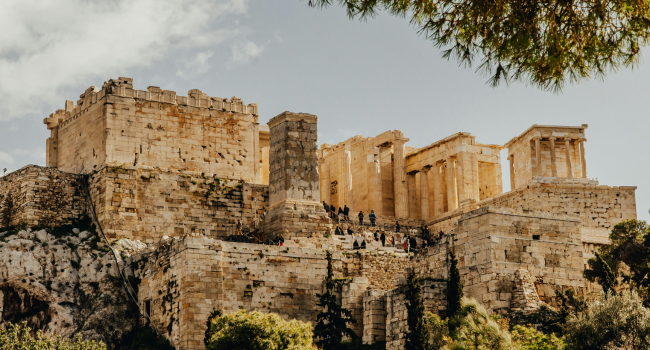
Most first-time visitors treat Athens as a base camp and little else. They give the Acropolis a morning, snap the Parthenon, and then feel obligated to bolt toward the islands as fast as the ferries allow. That instinct is understandable but costly. The Greek mainland holds some of the most consequential archaeological ground in the Western world, and much of it sits within a comfortable day’s reach of the capital.
This is where a shift in mindset pays off. Instead of treating the mainland as a hurdle before the beaches, treat it as the main event for a few days. Well-organized day trips let you reach places that reward deep attention without forcing you to relocate your luggage every night. Reputable operators running tours from Athens have essentially built their itineraries around this idea, pairing efficient transport with guides who can explain why a pile of weathered stone once mattered enormously.
Corinth as a case study in slowing down
Take one of the most rewarding examples of a site people underrate. A short drive west of Athens sits a city that was, in its prime, a commercial powerhouse straddling two seas. It controlled trade routes, grew wealthy, drew the attention of apostles and emperors alike, and was destroyed and rebuilt more than once. A rushed visitor sees rubble. A prepared visitor sees a crossroads of the ancient Mediterranean.
If you want to understand what you’re looking at before you go, a well-researched ancient corinth guide does the heavy lifting, walking you through the temple ruins, the towering rock fortress that loomed over the city, and the layers of Greek and Roman history stacked on the same ground. Reading twenty minutes of good background transforms the experience from “interesting stones” into something that genuinely lingers. That’s the whole thesis of slow travel in miniature: preparation converts sightseeing into understanding.
How context changes what you see
There’s a neuroscience-adjacent point worth making here, since it applies far beyond Greece. The brain notices what it has been primed to notice. Show someone a ruined marketplace with no framing and they register vague old-ness. Tell them that merchants from Egypt, Italy, and Asia Minor once haggled in that exact spot, that a specific philosopher walked those flagstones, that the fountain in front of them supplied a city of tens of thousands, and suddenly the same view carries weight. Nothing physical changed. The attention did.
This is why the “highlight reel” style of travel tends to feel hollow in retrospect. It optimizes for proof that you were somewhere rather than the experience of actually being there. The photographs look identical to a million others precisely because the photographer had no relationship with the subject. Slow travel inverts the ratio. Fewer places, more depth, better memories.
Practical ways to build a slower itinerary
You don’t need to abandon efficiency to travel deliberately. A few principles help:
Anchor yourself in one base for several nights rather than hopping hotels. Constant repacking is the single biggest drain on energy and attention, and it quietly ruins the ability to be present.
Read one solid article about each major site before you visit. Not a novel, just enough to know the stakes. The return on twenty minutes of reading is enormous.
Go early or late. The same ruin at 8am in soft light, nearly empty, is a different emotional experience than the same ruin at noon under a crush of tour groups.
Leave gaps in the schedule. The best moments on any trip are usually unplanned, and a fully booked day has no room for them. A long lunch, an unhurried coffee, a wander down a street that wasn’t on the map, these are what people actually remember years later.
Talk to your guide. Local guides carry knowledge that no placard contains, and the difference between a good day and a transcendent one is often a single story told at the right moment.
Why this matters beyond the vacation
There’s a broader lesson embedded in all of this, one that applies to how many of us live rather than just how we travel. We tend to confuse motion with progress and accumulation with richness. More destinations, more photos, more entries on the list. Yet the things that stay with us are almost never the ones we rushed. They’re the ones we gave enough time to actually land.
Ancient Greece is an unusually honest teacher on this point because it refuses to be consumed quickly. Its sites don’t perform for the casual glance. They reveal themselves only to the visitor willing to stand still, to have read a little, to imagine the crowds and voices and commerce that once filled the empty spaces. The reward for that patience is not a better photograph. It’s a genuine sense of connection to a civilization that has shaped your own in ways you probably never noticed.
The takeaway for your next trip
If you’re planning a visit, resist the urge to maximize the itinerary. Pick a handful of places that genuinely interest you, base yourself somewhere comfortable, and give each site the time it deserves. Let a good guide and a bit of pre-trip reading do the rest. You’ll return with fewer photographs and far more that you actually remember, which is the trade every experienced traveler eventually learns to make.
Greece will always be there, layered and patient, waiting for whoever’s willing to slow down enough to see it. The only question is whether you’ll arrive ready to look, or merely to glance.