Table of Contents
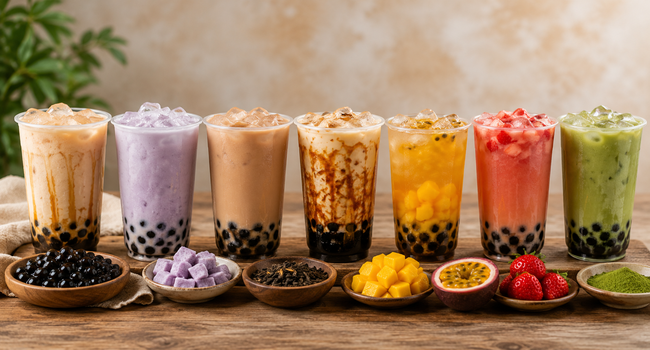
For many people, ordering boba tea starts with a familiar choice: milk tea with pearls. It is a classic for a reason. But once you look past the basics, there are dozens of types of boba tea to explore.
Some drinks are rich and creamy. Others are floral, fruity, citrusy, or refreshing. Some contain caffeine, while others are built around juice, herbs, or milk without tea. The variety can feel overwhelming at first, but it is also what makes boba tea easy to enjoy in different moods and seasons.
A Quick Introduction to Types of Boba Tea
The phrase “boba tea” is often used broadly, but it can refer to several different kinds of drinks.
At the center of most types of boba tea is a drink base. That may be black tea, green tea, oolong tea, jasmine tea, fresh milk, fruit juice, or an herbal blend. From there, the drink can be sweetened, flavored, topped, and adjusted to suit the customer.
That flexibility is why two people can visit the same boba shop and leave with drinks that taste nothing alike.
One customer may order unsweetened oolong milk tea with grass jelly. Another may choose mango green tea with popping boba. Both count as boba drinks, but the experience is completely different.
Classic Milk Tea: The Starting Point for Many Boba Fans
Classic milk tea is still one of the most recognizable types of boba tea. It usually combines brewed black tea with milk or non-dairy creamer and is served with tapioca pearls.
The black tea gives the drink depth, while the milk softens its bitterness and creates a smooth texture. Sugar can be adjusted, but many people enjoy classic milk tea at a moderate sweetness level because it allows the tea flavor to remain noticeable.
Tapioca pearls are the usual topping, although grass jelly, pudding, or coconut jelly can also work well.
For first-time customers, classic milk tea is often the easiest introduction to boba. It gives a clear sense of what the drink category is about: tea, sweetness, creaminess, and texture in one cup.
Tea Bases and How They Affect Flavor
Black Tea
Black tea creates a bold, familiar profile. It works well with creamier drinks and deeper flavors such as brown sugar, caramel, roasted notes, or chocolate-like additions.
It is usually the best choice for people who want their drink to taste like actual tea rather than simply flavored milk.
Green Tea
Green tea is lighter and fresher. It pairs particularly well with fruit because its herbal profile can balance sweetness and acidity.
Drinks such as passion fruit green tea, peach green tea, and lemon green tea are popular examples. They are especially refreshing on warmer days.
Oolong Tea
Oolong tea is more aromatic and layered than many black or green teas. Some varieties have floral notes, while others are roasted and slightly nutty.
Oolong milk tea is a good choice for people who want something smooth but less heavy than standard black milk tea. It also works beautifully with honey, sugar cane, or fresh milk.
Jasmine and Floral Tea
Jasmine tea has a gentle floral aroma that makes it especially suitable for fruit tea and lighter milk tea combinations.
Other floral flavors, such as rose or osmanthus, can create drinks that feel more delicate and fragrant. These are often popular with customers who want a drink that is less sweet and more aromatic.
Fruity Types of Boba Tea for a Lighter Drink
Fruit tea has become one of the most popular categories on modern boba menus.
Unlike milk tea, fruit tea often feels more like a refreshing beverage than a dessert. It can be made with brewed tea, fruit syrup, puree, juice, citrus slices, or a combination of these ingredients.
Common fruit flavors include:
- Mango
- Lychee
- Passion fruit
- Peach
- Lemon
- Grapefruit
- Strawberry
- Kumquat
- Watermelon
Most fruit drinks pair well with green tea, jasmine tea, or oolong. The tea adds structure, while the fruit gives the drink brightness.
Among the lighter types of boba tea, fruit tea is a good option for customers who enjoy acidity, freshness, and a less creamy finish.
Brown Sugar, Taro, and Other Dessert-Style Drinks
Not every boba drink is tea-forward. Some are designed to be rich, sweet, and almost dessert-like.
Brown sugar milk is one of the best-known examples. It often combines fresh milk with warm brown sugar syrup and tapioca pearls. The result is creamy, caramelized, and visually striking because of the syrup streaks around the cup.
Taro milk tea is another popular option. Its flavor is nutty, mellow, and slightly vanilla-like, while its purple color makes it stand out on a menu. Depending on the recipe, it may use tea, milk, or powdered taro flavoring.
Other dessert-style drinks may include matcha latte, chocolate milk tea, pudding milk tea, red bean drinks, or cheese foam tea.
These types of boba tea are ideal for people who want something more indulgent than refreshing.
Toppings: The Part That Makes Boba Tea Fun
Toppings are what turn a tea drink into a boba experience.
Traditional Tapioca Pearls
Tapioca pearls are chewy, slightly sweet, and satisfying to drink through a wide straw. They are often cooked in brown sugar syrup, which adds extra flavor.
They work well in milk tea, brown sugar drinks, and even some fruit drinks.
Grass Jelly and Herbal Toppings
Grass jelly has a subtle herbal taste and a softer texture than tapioca pearls. It is often paired with milk tea or roasted tea because its mild bitterness balances sweetness.
Aiyu jelly, aloe, and herbal jelly are good choices for fruit tea because they keep the drink light.
Pudding and Custard Toppings
Egg pudding and custard-style toppings create a creamy, dessert-like texture. They pair well with black milk tea, taro drinks, and chocolate-based drinks.
Popping Boba
Popping boba is filled with flavored juice and bursts when bitten. It is usually used in fruit tea, lemonades, slushes, and juice-based drinks.
It is a fun choice for people who do not enjoy traditional chewy pearls.
How to Customize Different Types of Boba Tea
One reason boba tea has become so popular is that customers can adjust nearly every part of the drink.
Most shops allow customers to choose:
- Sugar level
- Ice level
- Tea base
- Milk type
- Toppings
- Hot or cold serving style
A customer who wants a lighter drink may choose green tea, low sugar, less ice, and aloe. Someone looking for comfort may choose warm oolong milk tea with pudding. A person avoiding dairy can often choose oat milk or soy milk.
This level of customization means the same menu can work for many different tastes.
Conclusion
The best types of boba tea are not necessarily the most popular ones. They are the drinks that match what you are craving at the moment.
Classic milk tea is ideal when you want something creamy and familiar. Fruit tea works for a lighter, fresher choice. Oolong and floral teas offer more aroma, while brown sugar milk and taro drinks satisfy a dessert craving.
With different bases, flavors, milk options, and toppings available, there is always something new to try.
Read more on KulFiy