Table of Contents
Extra large wall art can completely transform a space. It can make a living room feel more expensive, a bedroom more peaceful, an office more professional, or an empty hallway more memorable. But because oversized artwork has such a strong visual impact, choosing the wrong piece can also create problems very quickly.
When people buy small decor items, mistakes are easier to hide. A small print can be moved to another corner, placed on a shelf, or grouped with other pieces. Extra large wall art is different. It becomes one of the main features of the room, so the size, color, style, and placement need to feel intentional.
The good news is that most mistakes are easy to avoid once you know what to look for. Here are the biggest errors people make when buying extra large wall art, and how to choose pieces that truly transform your space.
Choosing Art That Is Too Small for the Wall
This may sound surprising, but one of the most common mistakes people make with extra large wall art is still choosing something too small. Many buyers are afraid to go bold, so they select a piece that feels safe. Once it is placed above a sofa, bed, console, or dining table, it suddenly looks lost.
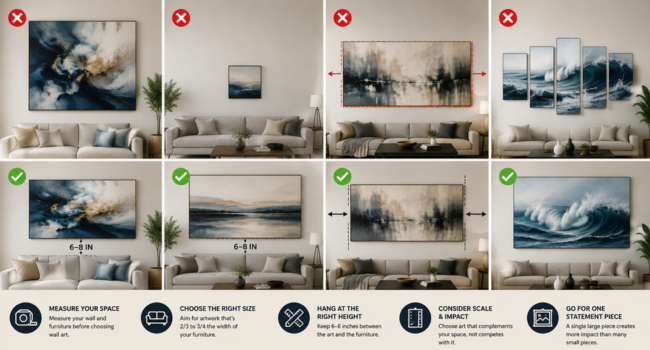
Large walls need visual weight. If the artwork is too small, the room can feel unfinished, even if the piece itself is beautiful. A good rule is to choose artwork that is around two-thirds to three-quarters the width of the furniture below it. For example, above a wide sofa, a narrow print may look disconnected, while a larger canvas creates balance.
When decorating a big wall, confidence matters. Extra large art should feel like a focal point, not an afterthought.
Ignoring the Room’s Proportions
Not every large artwork works in every room. A tall vertical piece may look elegant in an entryway, but it might feel awkward above a long sofa. A wide horizontal canvas can look perfect over a bed, but it may not suit a narrow wall between two windows.
Before buying, look at the shape of the wall. Is it wide, tall, narrow, or open? Then choose art that follows the architecture of the space. A horizontal wall usually needs horizontal artwork. A tall blank wall often benefits from a vertical piece. A square wall can handle square or balanced abstract artwork.
This is where measuring becomes essential. Guessing often leads to disappointment. Use tape to mark the approximate size on the wall before ordering. This gives you a real sense of how much space the artwork will occupy.
Picking Colors That Fight the Room
Extra large wall art has a major effect on the color mood of a room. A small bright print may add a fun accent, but a huge colorful canvas can dominate the entire space. That is why color choice matters so much.
One mistake people make is choosing art only because they like the image, without considering the existing furniture, rugs, curtains, flooring, and wall paint. The artwork does not need to match everything perfectly, but it should feel connected to the room.
A simple approach is to choose art that repeats one or two colors already present in the space. Another option is to use the artwork as a bold contrast, but this should feel deliberate. For example, a neutral living room can look stunning with a dramatic black, gold, blue, or earthy-toned artwork if the rest of the room allows it to breathe.
For carefully selected oversized pieces, Large Wall Art for bold interior styling can help create that strong focal point while keeping the room elegant and balanced.
Forgetting About the Mood of the Space
Wall art is not only visual. It creates emotion. A piece that looks amazing online may not create the right feeling in your room.
For a bedroom, you may want something calming, soft, or warm. For a dining room, you might prefer something expressive and conversation-starting. For an office, you may want artwork that feels focused, modern, and professional. For a living room, you can usually choose something more personal because it is the heart of the home.
The mistake is buying art without asking, “How do I want this room to feel?” A dramatic piece can bring energy, but it may feel too intense in a relaxation space. A very soft piece can create peace, but it may not have enough impact in a large open room.
The best artwork supports the purpose of the room.
Hanging the Artwork Too High
Even the right piece can look wrong if it is hung badly. One of the most common placement mistakes is hanging extra large wall art too high. This makes the artwork feel disconnected from the furniture and can create an awkward empty gap.
As a general rule, the center of the artwork should sit around eye level. When hanging above furniture, the bottom of the artwork should usually be around 6 to 10 inches above the sofa, bed headboard, or console table. This helps the artwork feel connected to the room rather than floating above it.
In large rooms with high ceilings, you can adjust slightly, but the artwork should still relate to the furniture and human eye level. Luxury interiors rarely feel accidental. Placement is part of the design.
Buying Without Checking the Material and Finish
When buying extra large wall art, size and design are not the only things to consider. Material, finish, and printing quality matter a lot because flaws become more visible at a larger scale.
A low-quality image may look acceptable in a small format but appear blurry or flat when enlarged. A poor frame can make a large piece feel cheap. A finish that reflects too much light may be distracting in a bright room.
Before buying, check whether the artwork is canvas, framed print, acrylic, metal, or another material. Think about your room’s lighting and style. Canvas often feels warm and classic. Framed prints can look polished and gallery-like. Sleeker finishes may suit modern offices or contemporary interiors.
Extra large art should feel substantial, not flimsy.
Choosing Trendy Art With No Personal Connection
Trends can be useful for inspiration, but buying extra large artwork only because it is fashionable can be risky. Since oversized art dominates a room, you will see it every day. If the design does not mean anything to you, it may start to feel tiring quickly.
The best wall art usually has some personal connection. It may reflect a place you love, a color palette that calms you, an animal you feel drawn to, an abstract mood, or a style that matches your personality.
This does not mean every piece must have a deep story. But it should feel like it belongs in your world, not just on someone else’s Pinterest board.
Not Thinking About the Whole Room
Extra large wall art should not be chosen in isolation. It needs to work with the furniture, lighting, textiles, and empty space around it. A common mistake is adding a large piece to a room that already has too many competing elements.
If the room has patterned rugs, colorful furniture, bold curtains, and many decorative objects, a very busy artwork may create visual noise. In that case, something more minimal may work better. If the room is simple and neutral, stronger art can bring life and personality.
Think of art as part of the full composition. It should complete the space, not fight it.
Final Thoughts
Extra large wall art is one of the most effective ways to transform a room, but it requires thoughtful choices. The biggest mistakes usually come from guessing the size, ignoring proportions, choosing the wrong colors, hanging the piece too high, or buying something trendy without considering the room’s mood.
When chosen well, oversized artwork makes a space feel complete, confident, and personal. It gives the eye a focal point and turns an empty wall into a design statement. The key is to measure carefully, think about atmosphere, and choose a piece that feels connected to both the room and the people living in it.
Extra large wall art should not simply fill space. It should transform it.