Table of Contents
Pests are more than an annoying problem. They can affect your health, damage your home, contaminate food, and create stress that spreads through the whole household. A few ants on the counter may seem small, but pests often show up after they have already found food, water, shelter, or an entry point.
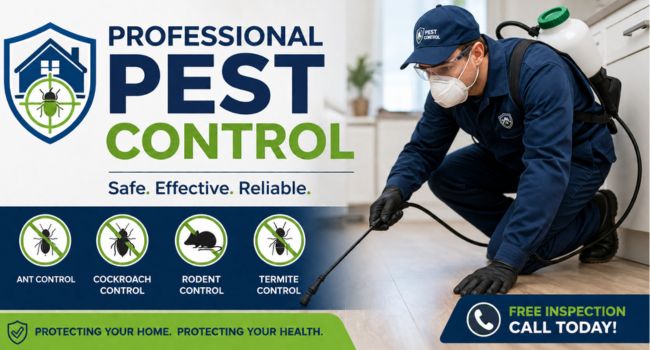
Professional pest control protects your family and home by finding the source of the problem, not just the pests you can see. A good service looks at how pests got in, where they are hiding, what they are feeding on, and what needs to change so they do not come back. That kind of protection matters because pests are not random guests. They move in when your home gives them an opening.
Professional Pest Control Starts With a Proper Inspection
A proper inspection is the difference between guessing and knowing. Many homeowners spray the first pest they see, then hope the problem is gone. That may work for one spider in the garage, but it usually fails when pests are nesting, breeding, or moving through hidden areas.
A professional inspection checks the places most people miss. This can include attics, crawl spaces, basements, wall gaps, garages, plumbing areas, rooflines, vents, cabinets, and foundation edges. Small clues can reveal a bigger issue. Droppings, shed skins, grease marks, damaged wood, mud tubes, wings, and unusual smells all tell part of the story.
Evo Pest Control looks at pest activity in connection with the home’s structure, moisture levels, food sources, and entry points. That kind of inspection helps build a treatment plan that fits the problem. Without that step, pest control becomes a game of whack-a-mole, except the mole has six legs and better hiding skills.
It Helps Reduce Health Risks Inside the Home
Pests can bring health concerns into kitchens, bedrooms, bathrooms, and living spaces. Cockroaches can contaminate surfaces and trigger allergy or asthma symptoms for some people. Rodents can leave droppings and urine behind food storage areas, insulation, and cabinets. Fleas, ticks, mosquitoes, and bed bugs can bite and create discomfort that quickly affects daily life.
Professional pest control helps reduce these risks by targeting the pest, the hiding area, and the conditions that support the infestation. For example, treating cockroaches often involves more than spraying along baseboards. It may require bait placements, crack and crevice treatment, moisture correction, and sanitation advice.
This matters even more for homes with babies, elderly family members, pets, or anyone with breathing issues. The goal is not only to remove pests. The goal is to reduce exposure to the things pests leave behind. A clean-looking home can still have activity in the walls, under appliances, or behind cabinets.
It Protects Food and Living Spaces
Pests go where food is easy to find. Kitchens, pantries, trash areas, dining rooms, and pet feeding stations are common targets. Once pests find a reliable food source, they often return again and again. Ant trails, pantry moths, cockroaches, flies, and mice can all turn a food area into a problem zone.
A professional pest control plan helps protect these spaces by identifying what is attracting pests. Sometimes the issue is crumbs under an appliance. Sometimes it is an open bag of pet food in the garage. Sometimes it is a tiny plumbing leak under the sink that gives pests the moisture they need.
Good pest control also helps you avoid overusing store-bought products in food areas. Many homeowners spray near counters, cabinets, and floors without fully understanding the label. Professionals use targeted methods in the right locations. That usually means less mess, less guesswork, and better control.
It Helps Prevent Property Damage
Some pests do not just bother your family. They quietly damage your home. Termites can attack wood structures. Carpenter ants can hollow out damaged or damp wood. Rodents can chew insulation, drywall, stored items, and even wiring. Wildlife can damage vents, soffits, roofing materials, and attic insulation.
The problem is that damage often starts where you cannot see it. By the time you notice sagging wood, scratching sounds, chewed food packages, or droppings, the issue may already be active. Professional inspections can catch warning signs earlier.
For example, a termite issue may start around moisture-damaged wood near the foundation. A rodent problem may begin with a small gap near a garage door or utility line. A wasp nest may form inside a wall void before anyone notices insects entering from outside. Professional pest control connects those clues before the problem gets expensive.
Professionals Use the Right Treatment for the Right Pest
Every pest behaves differently. Ants do not act like cockroaches. Bed bugs do not act like fleas. Rodents do not act like termites. A treatment that works well for one pest may do almost nothing for another.
Professional pest control protects your home by matching the treatment to the pest. Ants may need bait that reaches the colony. Cockroaches may need gel bait, dusts, traps, and sanitation changes. Rodents may need trapping, exclusion, and entry point repair. Termites may need soil treatment, bait systems, wood treatment, or a custom plan based on the property.
This is where experience saves time. A homeowner may spend weeks buying products that only treat the surface problem. A professional looks at the pest’s habits and chooses a plan that attacks the source. That is usually faster, cleaner, and less frustrating.
It Reduces the Risk of Misusing Products
DIY pest control can help with minor issues, but product misuse is common. People apply too much, spray the wrong area, mix products, use outdoor products indoors, or place bait where children and pets can reach it. None of that is worth the risk.
Professional pest control companies are trained to read labels, calculate application rates, and apply products in targeted locations. They know where treatments belong and where they do not. This helps reduce unnecessary exposure inside the home.
Product choice also matters. Many pest problems can be handled with baits, traps, exclusion, dusts, gels, or targeted crack and crevice treatments instead of broad spraying. The best plan is not always the strongest product. It is the most accurate one.
It Helps Keep Children and Pets Safer
Families often worry about pest control treatments around children and pets. That concern is fair. Kids touch floors, furniture, toys, and low surfaces. Pets sniff, lick, and explore places adults barely notice.
Professional pest control helps manage this by using proper placement and clear instructions. A technician can explain which areas were treated, how long to stay away from them, and what steps to follow after service. That removes the guesswork that often comes with store-bought sprays.
Parents and pet owners can also support the process by preparing the home before treatment. Put toys away, cover or remove pet bowls, store food properly, and follow any re-entry instructions. Safe pest control is a partnership. The professional handles the treatment, and the homeowner helps keep the space ready and controlled.
It Finds the Conditions That Attract Pests
Pests usually show up for a reason. They need food, water, shelter, warmth, or easy access. If those conditions stay in place, pests can return even after a treatment works.
A professional looks beyond the visible infestation. They may point out a leaky pipe, damaged door sweep, torn screen, clogged gutter, overgrown shrub, mulch against siding, or gap around a utility line. These small issues can act like open invitations.
This is one of the most useful parts of professional pest control. You get more than a treatment. You get a better understanding of your home’s weak spots. Once you fix those weak spots, pests have a harder time settling in.
It Helps Stop Infestations From Spreading
Pests spread fast when they find good conditions. German cockroaches can move from kitchens into bathrooms, laundry rooms, and wall voids. Bed bugs can travel from one bedroom to another through clothing, bedding, furniture, and bags. Rodents can move through walls, ceilings, garages, and storage areas.
Professional pest control helps stop that spread by treating the active areas and checking nearby risk zones. This matters because the room where you see pests is not always the only room with activity. The visible pest is often just the part of the iceberg that had bad timing.
Fast action can save money and stress. A small infestation is usually easier to handle than one that has spread through multiple rooms. Waiting often gives pests time to nest, breed, and become harder to remove.
It Gives You a Prevention Plan, Not Just a Treatment
Good pest control should not end when the technician leaves. A strong plan includes prevention, monitoring, and follow-up. That is how you keep your home protected after the first service.
A prevention plan may include:
- Sealing gaps around doors, windows, pipes, and vents
- Fixing leaks and reducing moisture
- Storing food in sealed containers
- Keeping shrubs and branches away from the home
- Setting up follow-up checks for high-risk pests
These steps are simple, but they work. Pests do not need much to survive. Remove the easy access, food, and shelter, and the home becomes much less attractive.
Common Mistakes Homeowners Make Before Calling
Many homeowners wait too long before getting help. They hope the pest problem will disappear on its own. Sometimes it does. More often, it grows quietly in the background.
Another mistake is treating only what is visible. Spraying ants on the counter may kill that trail, but the colony may still be active. Killing one mouse does not always mean the entry point is closed. Vacuuming bed bugs without a full plan may spread them if bedding and furniture are moved carelessly.
Homeowners also underestimate moisture. A slow leak, damp crawl space, clogged gutter, or humid basement can feed pest activity for months. You can spray all you want, but pests will keep returning if the home keeps giving them water and shelter.
When Professional Pest Control Makes the Most Sense
Professional pest control makes sense when pests are spreading, returning, causing damage, or creating health concerns. It also makes sense when the pest is hard to identify. Guessing costs time, and pests love time. It is their favorite free gift.
You should consider professional help for rodents, cockroaches, bed bugs, termites, wasps, hornets, fleas, ticks, and repeated ant problems. Unlike many household pests, bees should be handled with care because they are valuable pollinators and can become defensive when disturbed. Professional bee removal helps relocate hives safely while protecting both your family and the bee colony. You should also get help if pests are near children’s rooms, food storage areas, pets, attics, crawl spaces, or electrical areas.
DIY can work for small, simple problems. Professional service is better when the issue needs inspection, safe product use, entry point repair, or follow-up. The right choice depends on the pest, the risk, and how long the problem has been active.
Take the Next Step to Protect Your Home
Professional pest control protects your family and home by doing more than killing visible pests. It identifies the pest, finds the source, reduces health risks, protects food areas, helps prevent damage, and gives you a plan to keep pests from coming back. That is the difference between a quick reaction and real protection.
If you are seeing pests now, start with the basics. Note where you saw them, take photos if possible, remove exposed food, reduce moisture, and avoid heavy spraying before you know what you are dealing with. Then decide whether the problem is minor enough for DIY or serious enough for professional help.
The sooner you act, the easier the problem is to control. Pests are persistent, but they are not magic. With the right inspection, treatment, and prevention plan, you can protect your home, reduce stress, and keep your family’s living space cleaner, safer, and more comfortable.