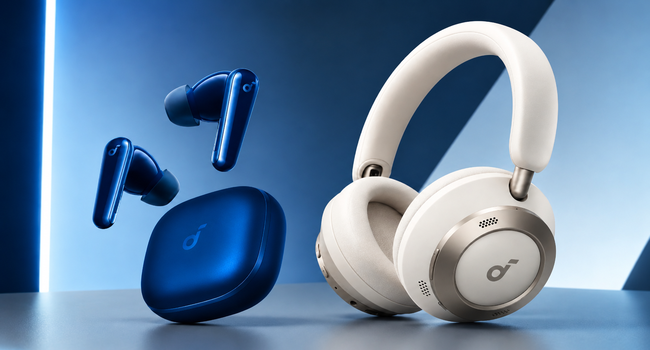
For a long time, headsets became the default choice for PC and console players because they offered lower latency, a wider soundstage, and a clearer boom mic. Today, mobile games are bigger, handheld consoles are more common, cloud gaming lets players leave the desk, and true wireless earbuds have moved into everyday scenarios such as commuting, calls, videos, and casual gaming. For many players, the question is no longer just whether a headset sounds more powerful, but whether it fits every platform and use case. This article compares gaming earbuds and gaming headsets across key factors, while separating standard Bluetooth earbuds, dedicated low-latency gaming earbuds, and traditional headsets, so you can choose the right form factor without treating everyday TWS as esports gear.
| Quick Verdict: Earbuds or Headset?Gaming headset for competitive PC or console play, long sessions, and serious team chat.Gaming earbuds for mobile, handheld, cloud, travel, glasses comfort, and everyday use outside gaming. |
Latency: Why Bluetooth Earbuds Are Usually for Casual Gaming
Latency is the biggest technical reason the gaming headset vs earbuds debate gets confusing. In simple terms, latency is the delay between an action on screen and the sound reaching your ears. In a story game, a small delay may not bother you. In a ranked shooter or rhythm game, it can make the game feel wrong.
There are three broad connection types to understand.
- Wired audio is still the most predictable. A 3.5mm connection, USB headset, or wired controller connection keeps delay low and avoids battery and wireless congestion issues. That is why many competitive players still trust wired headsets.
- 2.4GHz wireless is the gaming-focused wireless option. Instead of relying on standard Bluetooth, the headset or earbuds connect through a USB-C or USB-A dongle. Many gaming headsets use this approach, and dedicated gaming earbuds from SteelSeries, Sony INZONE, Razer, and similar brands use it to reduce lag on PC, console, or handheld devices.
- Standard Bluetooth is convenient but not automatically gaming-ready. Bluetooth earbuds work well for music, calls, video, casual mobile games, and many story-driven titles; without a verified low-latency mode, compatible codec, or gaming dongle, they should not be treated as competitive audio gear. That is also the right frame for mainstream TWS models such as soundcore Liberty 5: useful for casual play and multimedia use, but not a ranked-FPS latency pick.
Soundstage: Why Headsets Still Feel Bigger
Soundstage is the sense of width, distance, and space in what you hear. In games, it affects both immersion and your ability to read where sounds are coming from.
- Gaming headsets can get soundstage and bass more easily because of their physical structure. They usually have larger drivers, more air around the ear, and an over-ear enclosure that can create stronger low-end impact and a wider sound image. That does not mean every headset is accurate, but it explains why powerful game effects often feel larger through a good over-ear design.
- Earbuds can also improve immersion through tuning, Dolby Audio, spatial processing, and better drivers. Mainstream noise-cancelling earbuds with Dolby Audio can work well for movies, mobile games, and story-driven games, especially when users also need portability and ANC. On the over-ear side, soundcore Space One Pro is a useful headset-style reference because its ear-enclosing design, triple-composite drivers, Hi-Res audio point to the larger sound image that full-size headphones can create. But software space is still working within a smaller physical format. It can make earbuds sound more open, but it cannot fully replace the soundstage and bass of a full-size headset.
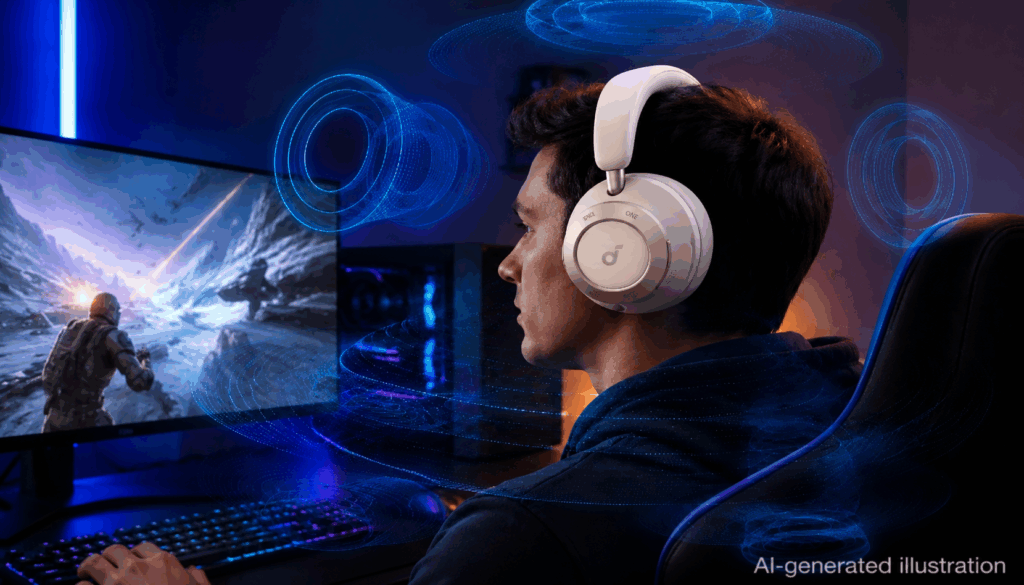
That is why the choice depends on the game. For cinematic RPGs, racing games, open-world adventures, and casual play, good earbuds can be enjoyable. For players who want the largest soundstage, stronger low-end impact, or more confidence in competitive spatial cues, headsets still have the structural advantage.
Microphone Quality: Team Chat vs Casual Calls
Microphone quality is where headsets still have a clear advantage for many gamers. A boom mic sits closer to your mouth, points toward your voice, and can be positioned away from keyboard noise, room reflections, and breathing sounds. If your friends constantly rely on your callouts in games, a good headset mic is hard to replace.
Earbud microphones have improved a lot. Modern true wireless earbuds use multiple microphones, beamforming, wind reduction, and AI voice processing to make calls clearer. soundcore Liberty 5 uses six microphones with AI voice processing and is suited to phone calls, video meetings, casual chat, and mobile voice. For comparison, Sony’s WF-1000XM5 uses bone-conduction sensors and AI-based noise reduction to improve voice pickup in calls. That is different from saying earbuds should replace a dedicated boom mic for ranked team chat.
The decision is simple:
- if voice chat is part of your competitive performance, choose a headset.
- If chat is occasional, mobile, or casual, earbuds are often good enough and easier to carry.
Comfort: Glasses, Heat, Hair, and Long Sessions
Instead of asking only which one is “more comfortable,” look at how long you play, whether you wear glasses, how warm your room gets, and whether your setup stays at a desk or moves with you. Headsets and earbuds create pressure in very different places: one sits around your head and ears, while the other sits inside your ear canal.
Glasses, Heat, and Hair
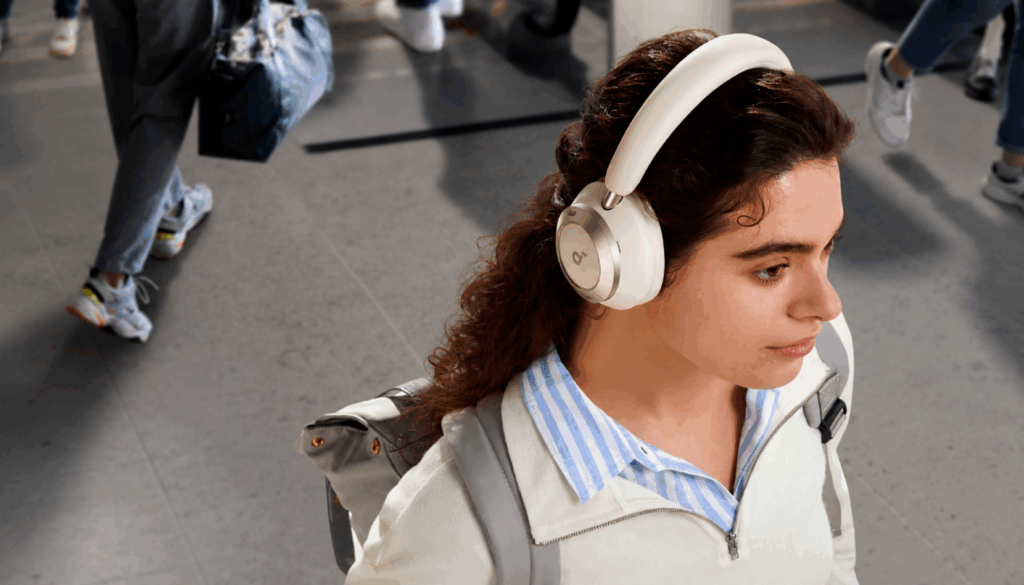
Headsets distribute weight through a headband and clamp around the ears, which can feel stable at a desk. The trade-off is pressure and heat: over-ear cups can press glasses arms into your temples, trap warmth around your ears, and flatten hair during longer sessions. Earbuds avoid those problems because they do not use a headband or cover the outer ear.
Long Sessions
Earbuds have their own comfort risks. Some players dislike in-ear pressure, need the right ear tip size, or feel fatigue from sealed tips. If you play for five hours at a desk, a soft over-ear headset may still feel better than keeping tips in your ear canals the whole time.
Portability
Earbuds are easier to pack, wear on a train, and use across gaming and daily life. soundcore Liberty 5 has IP55 water resistance and a light 4.6g-per-earbud design, which makes sense for commuters and mobile players. That feels very different from over-ear gaming headsets from brands like Turtle Beach, HyperX, or Logitech, which usually feel more secure at a desk but less discreet and less portable outside one. Those comfort advantages should not be read as a competitive gaming claim.
In short: choose earbuds if glasses, heat, hair, or portability matter most. Choose a headset if you want a secure desk fit or dislike wearing sealed tips for hours.
Platform Match: PC, Console, Handheld, Mobile, and Cloud Gaming
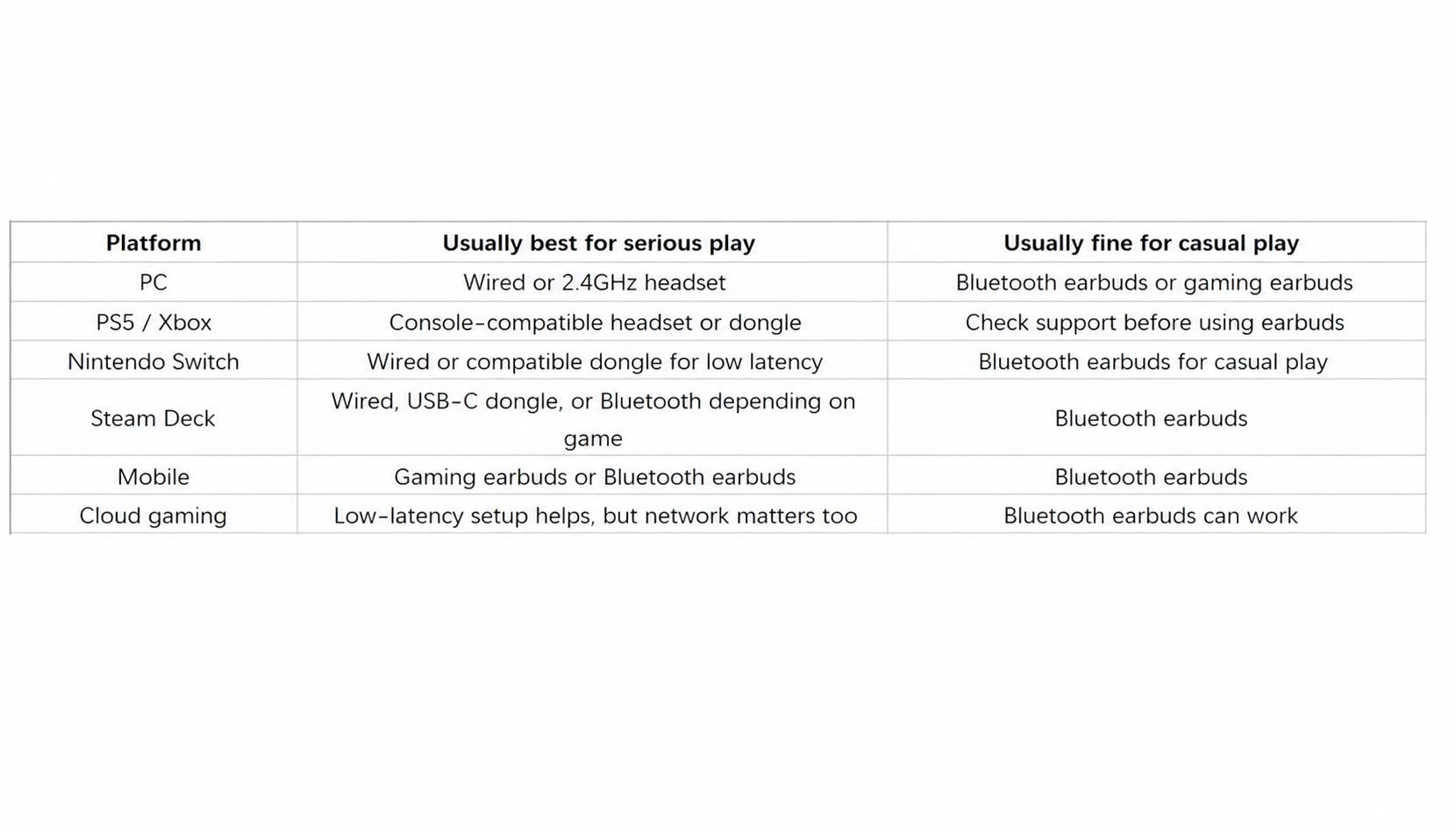
Platform compatibility can matter more than audio quality, because the best-sounding device is useless if it cannot connect the way you need. PC and mobile are usually flexible, while consoles and cloud gaming require more checking around Bluetooth support, dongles, codecs, and total latency.
If you want to explore more headset-style options, browse gaming headsets.
Conclusion: Which One Should You Buy?
Choose a gaming headset if your gaming setup lives at a desk or console station, you play competitive games, you talk often, and you care about stable low-latency audio. A headset is also the better default if you want bigger sound, a boom mic, and fewer compatibility surprises on PC or console.
Consider gaming earbuds if you move between platforms, play mobile or handheld games, wear glasses, dislike heat, or want audio gear that also works for commuting, calls, video, and music. For competitive play, focus on dedicated 2.4GHz gaming earbuds. For casual and multimedia play, mainstream true wireless earbuds can be part of the consideration set, but they are closer to everyday TWS than dedicated gaming gear.
FAQ
Are gaming earbuds good for competitive gaming?
They can be, but only if they are designed for it. Look for wired audio or a 2.4GHz dongle. Standard Bluetooth earbuds are usually better for casual gaming than competitive FPS or rhythm games.
Are Bluetooth earbuds good for gaming?
Bluetooth earbuds can be good for mobile games, RPGs, story games, video, and cloud gaming when latency is not critical. For esports, check for a gaming mode, compatible codec, or dedicated dongle instead of assuming Bluetooth is enough.
Do gaming headsets have better microphones than earbuds?
Usually, yes. A boom mic sits closer to your mouth and is easier to position. Earbud mics are convenient and much better than they used to be, but headsets generally win for serious team chat.
Which is better for glasses wearers?
Earbuds are often more comfortable because they do not press glasses arms against your head. Some headsets have soft pads and lower clamp force, but fit varies by person.
Which is better for battery life?
Headsets often last longer on a single charge. Earbuds rely on shorter per-charge battery life plus extra charges from the case. Compare single-charge and total-with-case numbers separately.
| Disclaimer: All third-party product, brand, platform, and game names mentioned in this article are trademarks or registered trademarks of their respective owners. soundcore is not affiliated with, endorsed by, or sponsored by these trademark owners. All comparisons are based on publicly available specifications and general product information as of June 2026. |
Read more on KulFiy