Table of Contents
The value of money is different around the world. Some currencies are worth a lot more than the US dollar. Others are worth so little that you need thousands of them to get just one dollar. The reason for this is that the value of a currency depends on things like the economy, the government’s decisions, and what people think about the currency. The difference between the highest currency in the world and the weakest currencies illustrates how diverse global monetary systems operate.
Once you understand these differences, it helps travellers plan foreign exchange requirements more effectively. When you exchange Indian rupees for foreign currency, the amount you receive depends on where you travel and how your destination currency is valued against the rupee.
What Makes One Currency Stronger Than Another?
Currency value alone does not determine a country’s economic strength. A high-value currency does not automatically indicate a prosperous economy, just as a low-value currency does not mean economic weakness. Several factors influence where a currency sits on the global exchange scale, such as:
- Economic Growth
- Inflation Levels
- Interest Rates
- Trade Balance
- Foreign Exchange Reserves
- Political and Financial Stability
- Market Demand and Supply
- Government and Central Bank Policies
The Highest Currency in the World: Countries with the Strongest Exchange Rates
Several Middle Eastern currencies consistently rank among the highest-valued currencies globally due to their exchange rate systems and economic structures. The Kuwaiti Dinar holds the position of the highest currency in the world, with one dinar worth more than three US dollars. This reflects Kuwait’s substantial oil wealth and its managed exchange rate policy.
| Currency | Country | Approx Relative Value vs USD* | Key Reason |
|---|---|---|---|
| Kuwaiti Dinar (KWD) | Kuwait | 1 KWD ≈ 3.25 USD | Oil wealth and managed exchange rate |
| Bahraini Dinar (BHD) | Bahrain | 1 BHD ≈ 2.65 USD | Stable monetary framework |
| Omani Rial (OMR) | Oman | 1 OMR ≈ 2.60 USD | Pegged exchange system |
| Jordanian Dinar (JOD) | Jordan | 1 JOD ≈ 1.41 USD | Monetary stability |
| British Pound (GBP) | United Kingdom | 1 GBP ≈ 1.35 USD | Major reserve currency and global demand |
The Bahraini Dinar and Omani Rial follow closely behind the Kuwaiti Dinar. Both currencies benefit from oil-based economies and fixed exchange rate arrangements.
The British Pound is a major reserve currency with global recognition. Its value reflects the United Kingdom’s position in international finance and trade, though it ranks below the Gulf currencies in pure exchange rate terms.
The Lowest Currency in the World: Countries with the Weakest Exchange Rates
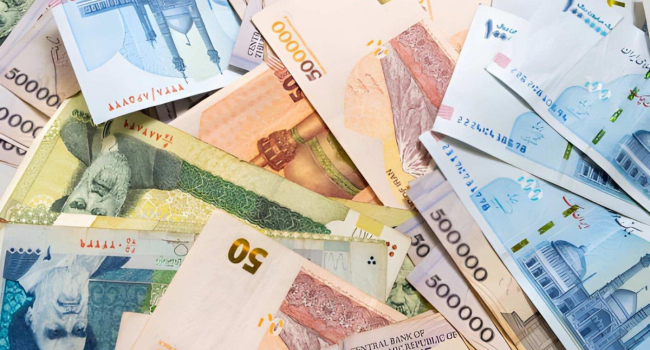
Some currencies have very low exchange values because of inflation, economic disruptions, or long-term monetary challenges. The Iranian Rial ranks among the lowest currencies in the world, with tens of thousands of rials required to equal one US dollar.
| Currency | Country | Approx Relative Value vs USD* | Key Reason |
|---|---|---|---|
| Iranian Rial (IRR) | Iran | 1 USD ≈ 42,000 IRR (official rate) | Sanctions and inflation |
| Vietnamese Dong (VND) | Vietnam | 1 USD ≈ 26,000 VND | Monetary denomination structure |
| Sierra Leonean Leone (SLE) | Sierra Leone | 1 USD ≈ 23 SLE | Inflation pressures |
| Lao Kip (LAK) | Laos | 1 USD ≈ 21,500 LAK | Economic constraints |
| Indonesian Rupiah (IDR) | Indonesia | 1 USD ≈ 16,500 IDR | Large currency denomination system |
The Vietnamese Dong and Indonesian Rupiah have low unit values but belong to growing economies. Vietnam has experienced steady economic development, while Indonesia represents Southeast Asia’s largest economy. Their low currency values reflect historical denomination choices instead of the current economic weakness.
The Sierra Leonean Leone and Lao Kip face ongoing inflation pressures and economic constraints. These currencies illustrate how political instability and limited export capacity can affect exchange rates over time.
Does a High Currency Value Mean a Richer Country?
Currency value and economic strength are different concepts that should not be confused. Japan has the world’s third-largest economy, yet the Japanese Yen trades at over 100 units per US dollar. Meanwhile, some high-value currencies belong to smaller economies with limited diversification.
Low-value currencies can belong to growing economies with strong fundamentals. Vietnam and Indonesia demonstrate this clearly, as both countries have achieved consistent GDP growth despite their weak currency values. The numerical exchange rate reflects monetary policy choices and historical denomination structures.
Buying Forex for High-Value vs Low-Value Currency Destinations
| Travel Scenario | Key Consideration |
|---|---|
| High-value currencies (KWD, BHD, OMR) | Smaller currency amounts represent significant value |
| Mid-range currencies (USD, EUR, GBP) | Exchange rate monitoring becomes important |
| Low-value currencies (VND, IDR, LAK) | Travellers carry larger numerical amounts |
| Multi-country trips | Forex cards simplify currency management |
When purchasing foreign exchange for destinations with high-value currencies like the Kuwaiti Dinar or Bahraini Dinar, you receive fewer currency units per rupee. These smaller amounts can still cover substantial expenses due to the currency’s purchasing power in the local market.
How Exchange Rates Influence Your Forex Purchase Decisions?
- Favourable rates can reduce travel costs: A stronger Rupee allows you to get more foreign currency for the same amount of money.
- Rate fluctuations affect budgeting: Exchange rate movements can increase or decrease the amount required for travel, education, or overseas expenses.
- Timing can influence exchange value: Monitoring market trends may help you exchange currency when rates are relatively more favourable.
- Currency volatility varies across destinations: Some currencies experience larger fluctuations than others, which affects planning and budgeting.
- Large transactions are more sensitive to rate changes: Even small exchange rate movements can significantly impact the total cost of high-value purchases.
- Exchange rates influence forex product choices: Travellers may choose between currency notes and forex cards based on prevailing rates and expected spending patterns.
Conclusion
Currency values reflect a combination of economic conditions, monetary policy decisions, and market demand instead of simple measures of national wealth. The highest currency in the world, the Kuwaiti Dinar, demonstrates how oil revenues and exchange rate management create strong currencies. Meanwhile, the lowest currency in the world, such as the Iranian Rial, shows how sanctions and inflation affect currency values over time.
Once you know more about these differences, it helps you make informed forex decisions. Choose regulated forex solutions that match your destination and spending needs, and consider both exchange rates and local purchasing power when planning your travel budget.